Science
Programming
Artificial Hyppocampus
Spatial memory and more
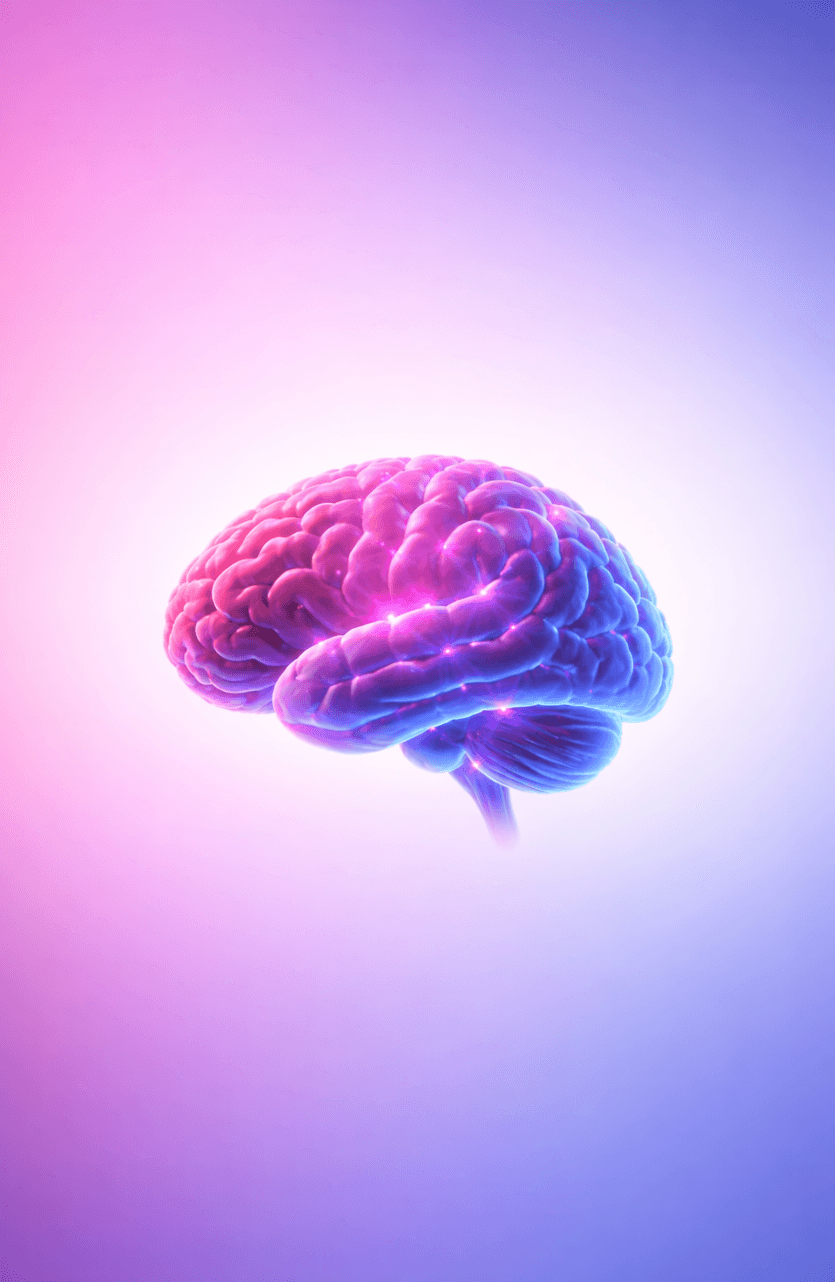
The hippocampus is one of the most studied structures in the brain, and its importance becomes obvious the moment it fails. Hidden deep within the medial temporal lobe, it allows us to form new episodic memories and orient ourselves in physical space. When it is damaged, people struggle to create new memories and often lose their sense of spatial direction. These deficits are not accidental. They reveal what the hippocampus is fundamentally doing.
The hippocampus functions as a mapping engine that constructs internal representations of environments and experiences. It tracks where we are, how locations connect, and how movement unfolds over time. Instead of archiving isolated data, it organizes relationships. The result is what researchers call a cognitive map — a structured internal model that allows us to navigate not only space, but sequences and context.
How it works
Research in animals and humans has identified specialized neurons within the hippocampal system that make this mapping possible. Place cells activate when we occupy a particular location. Grid cells in the entorhinal cortex fire in repeating geometric patterns that create a coordinate-like structure for space. Head-direction cells encode which way we are facing, while boundary cells respond to environmental edges.
Together, these components act like a distributed positioning system. The brain continuously integrates vision, motion, and sensory feedback to update its internal map. But the map is not static. It is dynamic and predictive. The hippocampus encodes how locations connect and what transitions between them look like. If a familiar path is blocked, it can simulate alternative routes by moving through its internal representation. Navigation becomes a process of inference rather than simple recall.
Modelling the Hippocampus
From a computational standpoint, the hippocampus appears to perform three core operations. It represents spatial states, links those states into sequences, and predicts future transitions between them. Various mathematical models attempt to capture these functions. Recurrent neural networks reflect aspects of sequence encoding. Continuous attractor models reproduce grid-like spatial stability. Reinforcement learning frameworks reinterpret the hippocampus as a predictive map that estimates likely future states based on learned structure.
In artificial systems, neurones are replaced by vectors and matrices. States become embeddings. Transitions become probabilistic links. Policies determine how an agent moves through its modelled environment. The underlying logic, however, remains the same. Represent structure. Update position. Predict what comes next.
Artificial Hippocampus
Building an artificial hippocampus means designing systems that can generate relational maps, adapt them as experience accumulates, and simulate possible futures. Robotics offers a practical arena for this work. Autonomous agents already use SLAM algorithms to construct maps and localise themselves. But those systems are mostly geometric and deterministic. They map surfaces, not meaning.
A hippocampal inspired architecture would integrate context and uncertainty into navigation. Graph neural networks already resemble cognitive maps, with nodes representing states and edges encoding transitions. Transformer-based world models can simulate movement through these graphs without physically traversing them. These tools point toward systems capable of flexible planning grounded in structured internal representations.
The obstacle is efficiency. Biological systems compress immense sensory input into compact relational codes with extraordinary energy efficiency. Artificial systems often require massive datasets and compute to approximate similar capabilities. Bridging that gap is less about copying neurones and more about capturing principles of abstraction.
Beyond Physical Space
The hippocampus does more than guide us through rooms and streets. It organizes experiences within relational and often spatial frameworks. Memories are encoded with context and sequence, allowing recall to reconstruct not just what happened, but where and how events unfolded. The same machinery that helps us navigate a city may also help us navigate our past.
This suggests that spatial computation could be a general organizing principle of memory. If so, an artificial hippocampus would not be limited to robotics. It could underpin memory indexing systems, knowledge graph traversal, and scenario simulation engines. Any problem that involves moving through structured relationships can be framed as navigation across a cognitive map.
Strategic Implications
The goal is not to replicate biology neurone by neurone. The goal is to extract its computational logic. The hippocampus demonstrates that intelligence depends on layered representation, relational encoding, and predictive simulation. Systems that build internal world models and use them to plan under uncertainty gain a decisive advantage.
Biology solved spatial intelligence through abstraction and prediction. Engineering must translate those principles into scalable architectures. The closer artificial systems come to functioning as mapping engines rather than static databases, the closer they move toward genuine contextual understanding.